
- Clothes make the man, but the belt makes the taekwondo athlete
- Grammar and nuance isn’t just tricky in English
- Our story doesn’t end in Tokyo…
- My point? Why am I writing about a Korean mistranslation by a Spanish athlete?
- What do you think I’m trying to do with this site and my Instagram feed?
- How do you get the help you need when you need it?
Ah, the Tokyo 2020 Olympics! It seems like only yesterday. To be fair, the Olympics did end just over a month ago. For most of the world, COVID-19 and uniform controversies were the talk of the games. But there was another story that made some headlines in Korea. It had to do with an athlete who decided to “train hard dream big.”
The incident I’m referring to involved the Korean sport of taekwondo. It didn’t involve a scoring or judging controversy. It didn’t even involve a Korean athlete. But it did involve Korean, specifically, the written Korean alphabet, called Hangul.
The taekwondo gold medal match was held on Saturday, July 24th. The match featured Spanish athlete Adriana Cerezo Iglesias versus Turkish athlete Rukiye Yildirim. It wasn’t the match itself that drew attention in Korea. It was the Spanish fighter, Adriana Cerezo Iglesias.
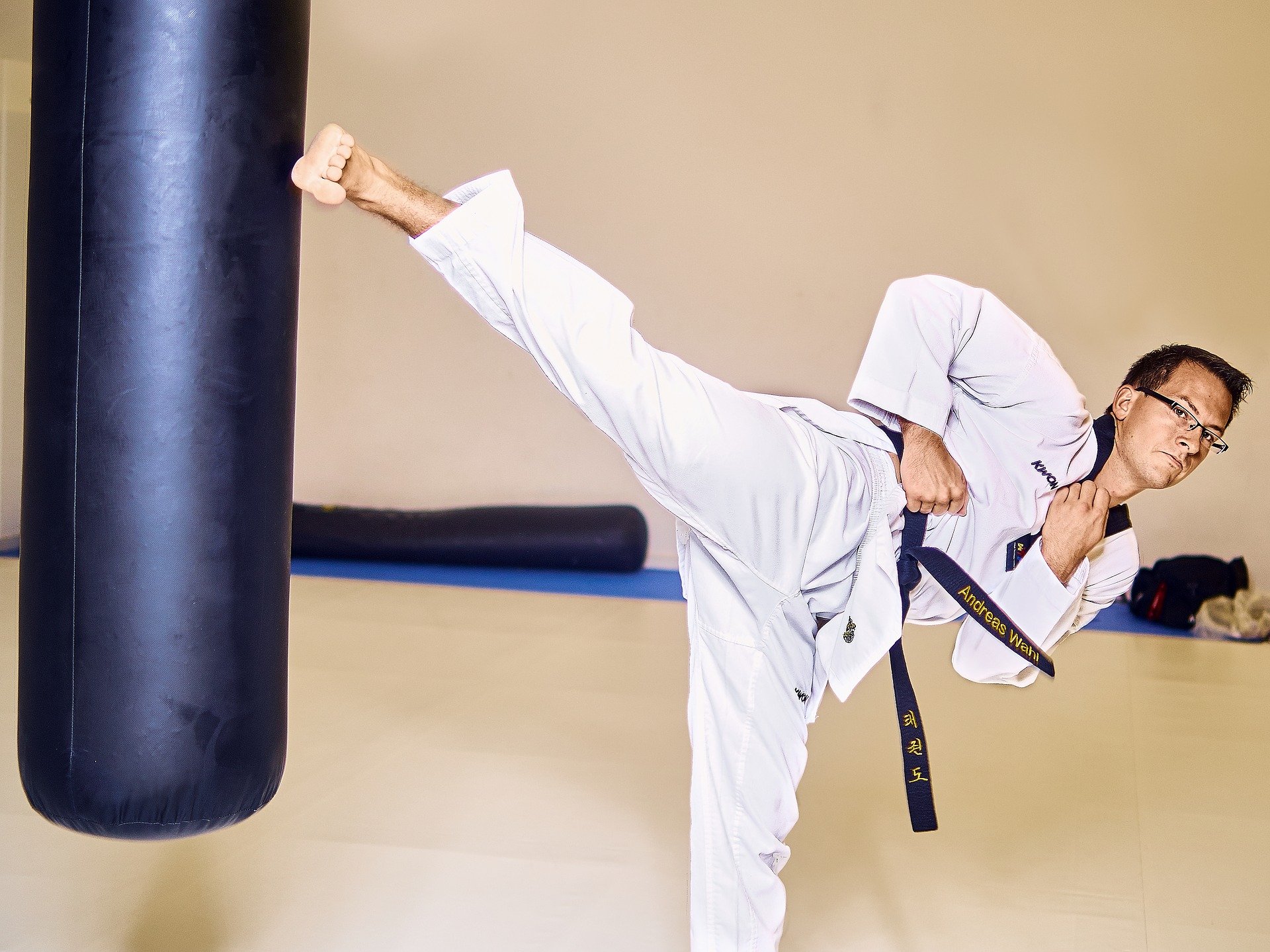
This attention wasn’t related to her spirit, skill, or performance. Her uniform was the focus of attention—an essential part of her uniform. The cause of all the attention she received was her black belt.
Clothes make the man, but the belt makes the taekwondo athlete
The belt Adriana wore during the Olympics had her name embroidered on it. This is a common practice. My son has such a black. But Adriana’s belt was embroidered with something other than her name.
It was embroidered with an inspirational phrase. It wasn’t written in her native Spanish. She decided to honor the roots of taekwondo and embroidered the phrase in Korean.
She had her belt embroidered with the phrase: Train hard dream big.

Well, that’s what she thought it said. Unfortunately, it did not. The Korean phrase appeared as “기차 하드, 꿈 큰.” Let me break it down for those of you who don’t read Hangul:
- 기차 = train
- 하드 = hard
- 꿈 = dream
- 큰 = big
Looks okay, right? So what was the problem? It comes down to nouns, adjectives, adverbs, and verbs—good, old-fashioned grammar.
Grammar and nuance isn’t just tricky in English
- 기차 = train—as in a “choo-choo” train, a mode of transportation (noun)
- 하드 = hard—this is a transliteration of “hard” into Korean, which is sometimes acceptable. The Korean word for a computer hard disk is “hard” [하드]. But it’s not used as an adverb.
- 꿈 = dream, in the noun form, but it’s missing an essential Korean element—a subject marker.
- 큰 = big—this means big, but it’s the adjective form. In the phrase dream big, “big” is an adverb.
Translating four words seemed like an easy, straightforward task. But the end result did not mean “train hard dream big” as intended. Naturally, Koreans picked up on the awkward Korean phrase.
Most reactions were of mild amusement and support for Adriana’s attempt to use Korean. The phrase was grammatically incorrect. Yet Koreans were able to deduce the intended meaning. For the most part, her attempts were supported.
But outside of Korea, her mistake was often mocked on social media. One post on Twitter, with almost a thousand likes and 400+ retweets, ridiculed Adriana for the “broken Korean.” Many wondered if she’d used auto-translate to translate “train hard dream big.” They wondered why she hadn’t bothered to check with someone.
Our story doesn’t end in Tokyo…
But the story did not die with the Olympics. On Monday, Sept. 6th, someone paid a visit to Adriana’s training facility. It was the Korean Ambassador to Spain, Bahk Sahnghoon. (Side note: Some English news sites have written his name in a more “traditional” way—Park Sang-hoon. I have chosen to use the spelling from the Korean Embassy in Spain’s website.) He did not show up empty-handed.

He presented Adriana with a new black belt. This belt had the phrase, “Train hard dream big” written correctly in Korean—훈련은 열심히. 꿈은 크게!
- 훈련은 = train (practice)
- 열심히 = hard (exert great effort)
- 꿈은 = dream (noun with subject marker)
- 크게 = big (adverbial form)
Ambassador Bahk brought lots of other goodies. They included Korean cosmetics, masks, and albums from BLACKPINK and BTS.
My point? Why am I writing about a Korean mistranslation of “train hard dream big” by a Spanish athlete?
First of all, we all make mistakes. I’ve made some embarrassing mistakes in Korean—and a few in English, I’m sure! But when I’m writing in Korean, I get someone to check my Korean to ensure it’s accurate. Having a Korean wife who is a professional translator comes in handy.
Second, when a non-native speaker makes a grammatical error, native speakers notice. Especially when it’s written and displayed for all to see. The writing on a taekwondo belt is relatively small, but TVs are big! Koreans noticed the mistake. It jumped out at them.
Third, Adriana made a mistake, yet her message was understood. But as noted, not everyone saw this as a simple goof. Many wondered why she hadn’t bothered to get her Korean translation of “train hard dream big” checked by a native Korean speaker. Especially since it was embroidered. This wasn’t a conversational mistake. There was time to check.
Fourth, Koreans supported Adriana’s effort. But someone deemed it necessary to present her with a belt displaying the proper phrase. The mistake was “cute,” but there was a need to show her the proper way to do it. Now she can go to her next competition with confidence. Confident in her ability and confident that the Korean on her belt is correct.
What do you think I’m trying to do with this site and my Instagram feed?
You guessed it! Fix mistakes like this. Some of the errors are good for a laugh. But creating a sign, menu, or displaying English on clothing is not an immediate act. There is time to check the spelling, grammar, and punctuation.
In a previous Instagram post, I joked that I have one goal with my Instagram feed. If I can do one thing, it will be to get rid of banners across Korea that scream “Grand Open!” One person told me he’d seen the phrase so often in Korea that he’d forgotten the proper English expression.

Grand Opening! Three more letters! That’s all you need.
How do you get the help you need when you need it?
But if your sign doesn’t say “Grand Opening,” and you want to get it checked, what should you do? Who you gonna call? No, not Ghostbusters!
You’re gonna:
- Message DC CopyPro from this page.
- Send me the text (or a picture) of an English sign, phrase, or slogan.
- Wait for a little while (if I’m at my computer, likely a few minutes).
- Get a message from me that either says your English is perfect—or I’ll suggest a corrected version.
That’s it! Easy! You can even write to me in Korean! Notice I didn’t include my banking info? That’s because this is a FREE service! It only takes me a few seconds to correct a sign or a slogan. You can also check out this post on approved English signs for Korean businesses.
How long would it have taken you to correct 기차 하드, 꿈 큰 to 훈련은 열심히. 꿈은 크게! Not long at all, right? I’ll have to charge you for bigger tasks like advertising posters, PPT presentations, or websites.
But for quick, simple things like this, it’s FREE! 자유! 아니오, 무료! 😉 Complete the contact form on this page to get help for FREE.
Subscribe to this blog or follow me on Instagram, Threads, Facebook, LinkedIn, or Twitter for more content and updates.