
- You want to spend how much on a keyboard?!?
- Do I need any workspace upgrades? I’ll make do with what I have
- Maybe a few workspace upgrades aren’t a bad idea—enter the Logitech K860 wireless ergonomic keyboard
- Ahhh…home sweet home never felt so good
- Houston, we’ve got a problem with one of these workspace upgrades
- Who knew there were so many new styles of mice on the market?
- Shake it to the left, now shake it to the right
- I can scroll for miles and miles
- It’s not all roses with these workspace upgrades
- My last upgrade was free—well, sort of
- Holy inconvenience, Batman!
- You don’t need fancy new tools, but a few useful workspace upgrades make a difference
I’m not cheap—but it wouldn’t be wrong to call me frugal. I don’t mind spending money, but I want to ensure I’m getting my money’s worth. I don’t like buying cheap stuff I’ll need to replace because it wears out. But I hate spending a lot of money on something that doesn’t perform as expected. After several months as a freelancer, I decided it was time for some workspace upgrades.
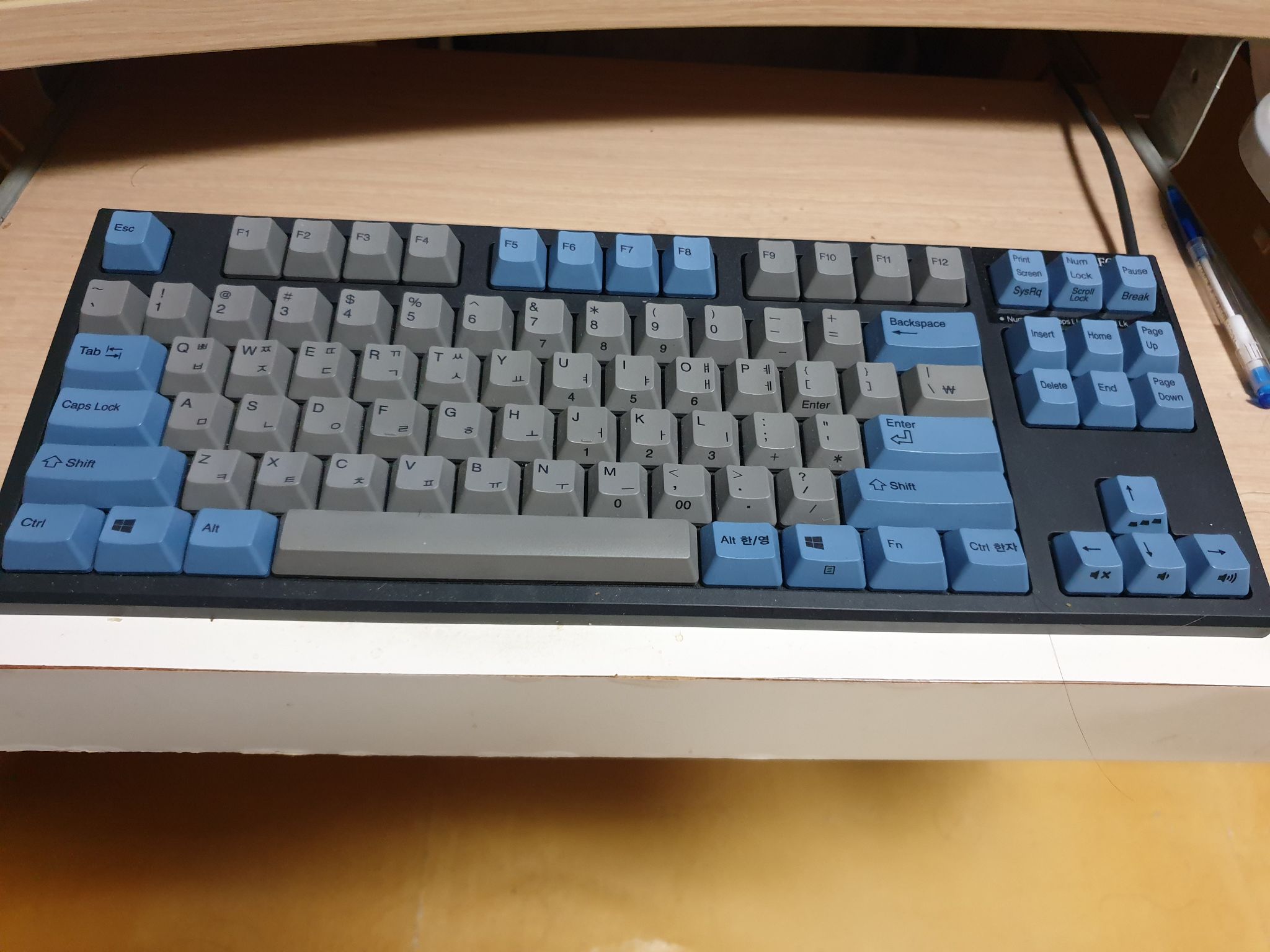
A few months ago, my wife, a freelancer of many years, told me she wanted to get a new keyboard. That sounded reasonable to me. Though her current keyboard worked fine, she was complaining about hand and arm pain. She felt the keys were too tough to press.
You want to spend how much on a keyboard?!?
I will admit I did a double-take when she told me the price. The keyboard she wanted (Realforce) was in the neighborhood of $300. It wasn’t even wireless! It’s a mechanical keyboard with an extremely low actuation force rating. This was the key feature she was looking for. We went to the store, tried it out, and she fell in love immediately.
I have to admit—it’s a great keyboard. I had to install some foam padding (after removing all the keys). Now, the actuation depth is very shallow. It is a dream to type on. My wife spends the majority of her time typing. Though shocked by the price tag at first, this seemed like a good investment to me.
Do I need any workspace upgrades? I’ll make do with what I have
I’ve posted pics of my makeshift living room office setup before. It’s simple, but it does the trick. The monitor on the right is an old HP I bought second-hand for about $30—15 years ago. I’m not playing games on it, and the resolution is noticeably worse than the laptop screen. But for editing documents, it’s all I need.
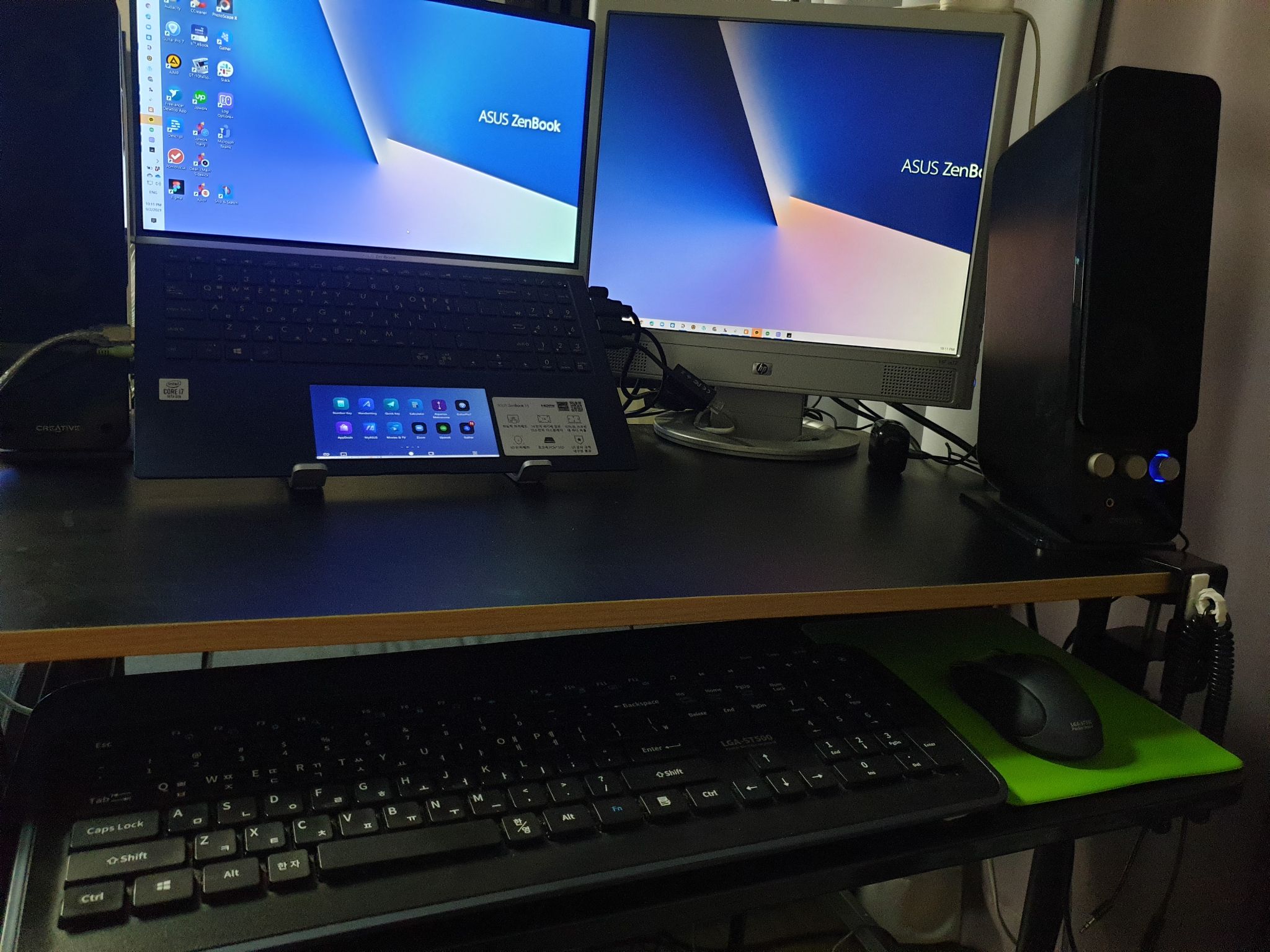
I was making do with my original wireless keyboard and mouse combo. The brand name is Panker—I’ve never heard of it. I’m pretty sure I bought it because it was cheap, had a unified USB receiver, and the mouse had a “back” button. You know the saying, “Ignorance is bliss?” Until I tried my wife’s new keyboard, I had no idea how bad mine was.
It was very clunky. I started noticing keys sticking. The mouse was functional, but it wasn’t anything special. My wife reasoned that a better keyboard would be a wise investment if I’m now spending most of my time typing. I had to agree.
Maybe a few workspace upgrades aren’t a bad idea—enter the Logitech K860 wireless ergonomic keyboard
I’ll admit, split keyboards like this have always intrigued me. They seem like they should function well. I get the theory behind the design, and it makes sense. My wife urged me to get a mechanical keyboard, but I didn’t feel I had to spend that much money. And this seemed like a good time to try an ergonomic keyboard.
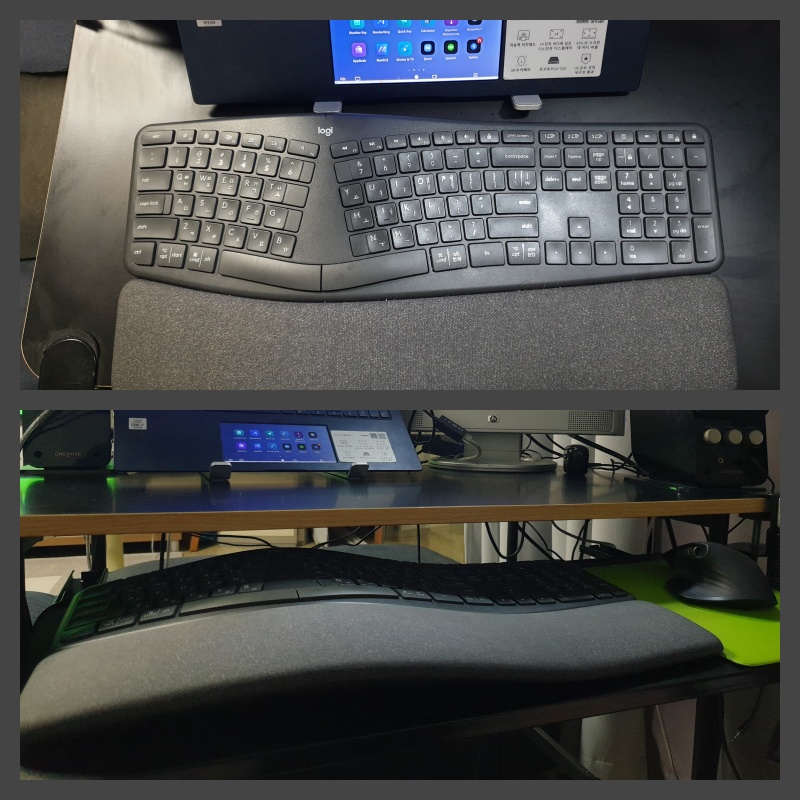
Knowing the keyboard connected via both Bluetooth and a unified USB receiver was a plus. I have limited USB ports, and though a USB hub is an option, this was a cleaner, simpler one. I know Bluetooth can be finicky. But knock on wood, since connecting it over a week ago, I’ve had zero issues. But knowing I have the USB dongle as a backup is comforting.
The main complaint against ergonomic keyboards seems to be the “learning curve.” I have to ask—what learning curve? From the moment I started typing with this, it just felt right. Being a touch typist is likely a significant factor. Many of the negative online reviews came from users who admitted to not being touch typists.
Ahhh…home sweet home never felt this good
As soon as I put my fingers on the home row, I knew exactly where my fingers needed to move. It felt instinctive. It’s nowhere near as smooth a typing experience as my wife’s mechanical keyboard. But it’s plenty comfortable and a definite upgrade from my previous clunker. I’m sure my wife would roll her eyes at my “inferior” keyboard.
It has a few neat features, too. Logitech’s software allows you to customize the function keys. If you sign in, the software will back up your settings. So, if I ever switch computers, I can install the software, and all my customizations will be right there.
Furthermore, you can make customizations for individual apps/programs. The function keys can perform certain functions in your web browser. But you can set them up to perform different ones in your media player or photo editor. I haven’t played around with these customizations much yet, but more on that later.
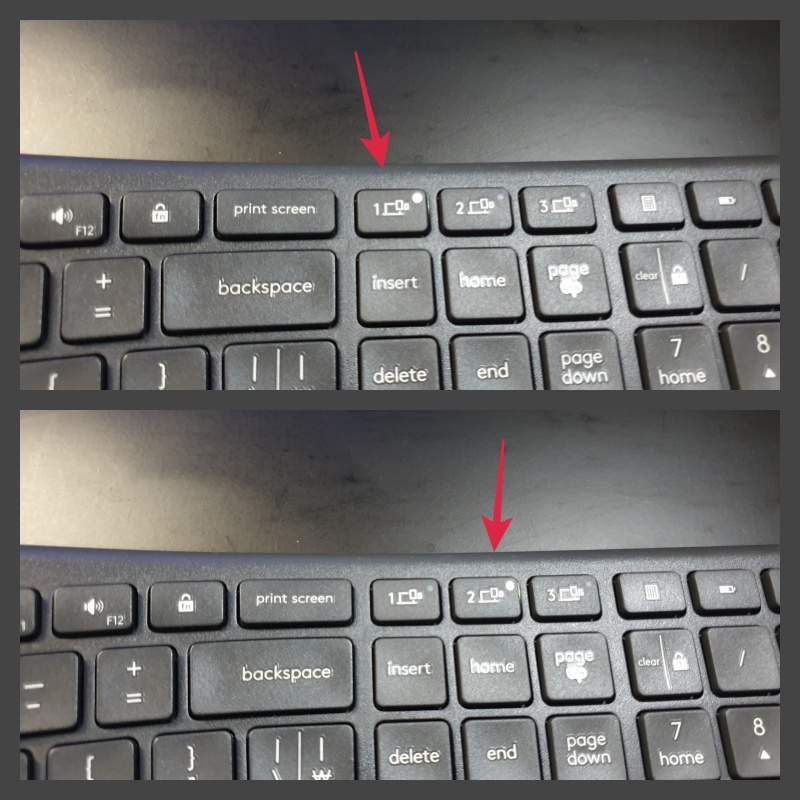
You can also pair it with up to three devices. Currently, it’s paired with my laptop and my phone. Switching between devices is as simple as pressing a button. Unfortunately, my TV only allows Bluetooth connections to specific LG keyboards. That would’ve been sweet.
Houston, we’ve got a problem with one of these workspace upgrades
There are a few minor drawbacks. One of the major complaints about this keyboard is that there is no backlighting. But this is not an issue for me. I rarely look at the keyboard. Besides, the absence of a backlight means improved battery life. According to the documentation, the two AAA batteries can last up to two years.
The biggest downside is that some previously one-handed keyboard shortcuts are impossible. Well, they’re definitely more challenging. I often use “Ctrl + n,” a comfortable pinky + index finger shortcut on my old keyboard. That doesn’t work on the split keyboard. I switched to doing it as a two-handed shortcut, but I realized it’s possible as a pinky + thumb shortcut. A little awkward—but doable. It’s a minor drawback that I can live with, or at least find a workaround for.
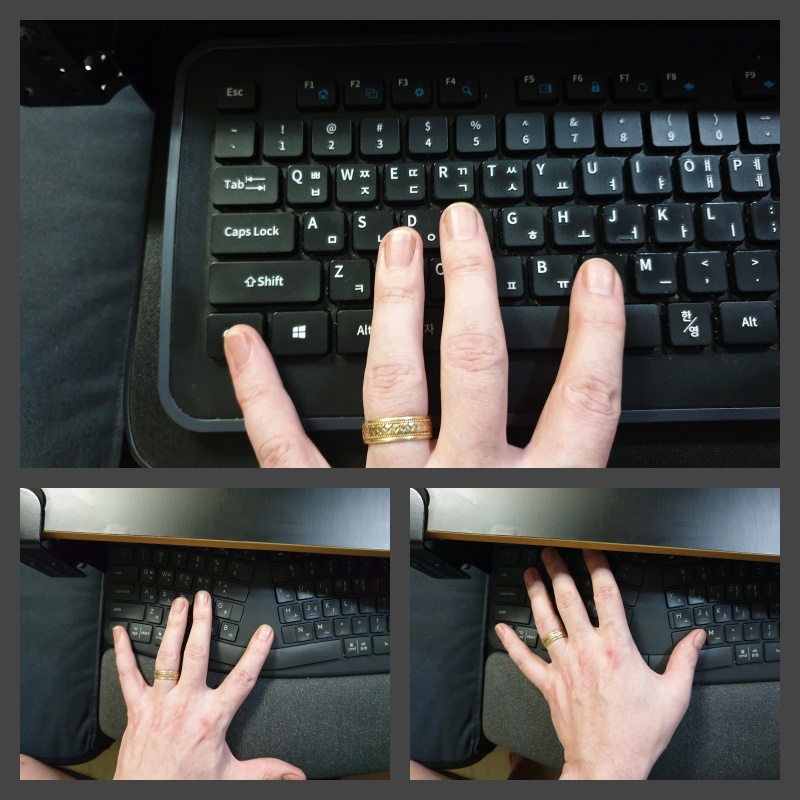
Another minor drawback is that the keyboard is quite big—due to the palm rest. The palm rest is quite comfortable, but it’s not detachable. The keyboard would be pretty uncomfortable without it due to its curved design. I sometimes like to put the keyboard on my lap when typing. It’s a bit big in that position, but it’s manageable. Actually, with the split design, it’s very comfortable typing in this position.
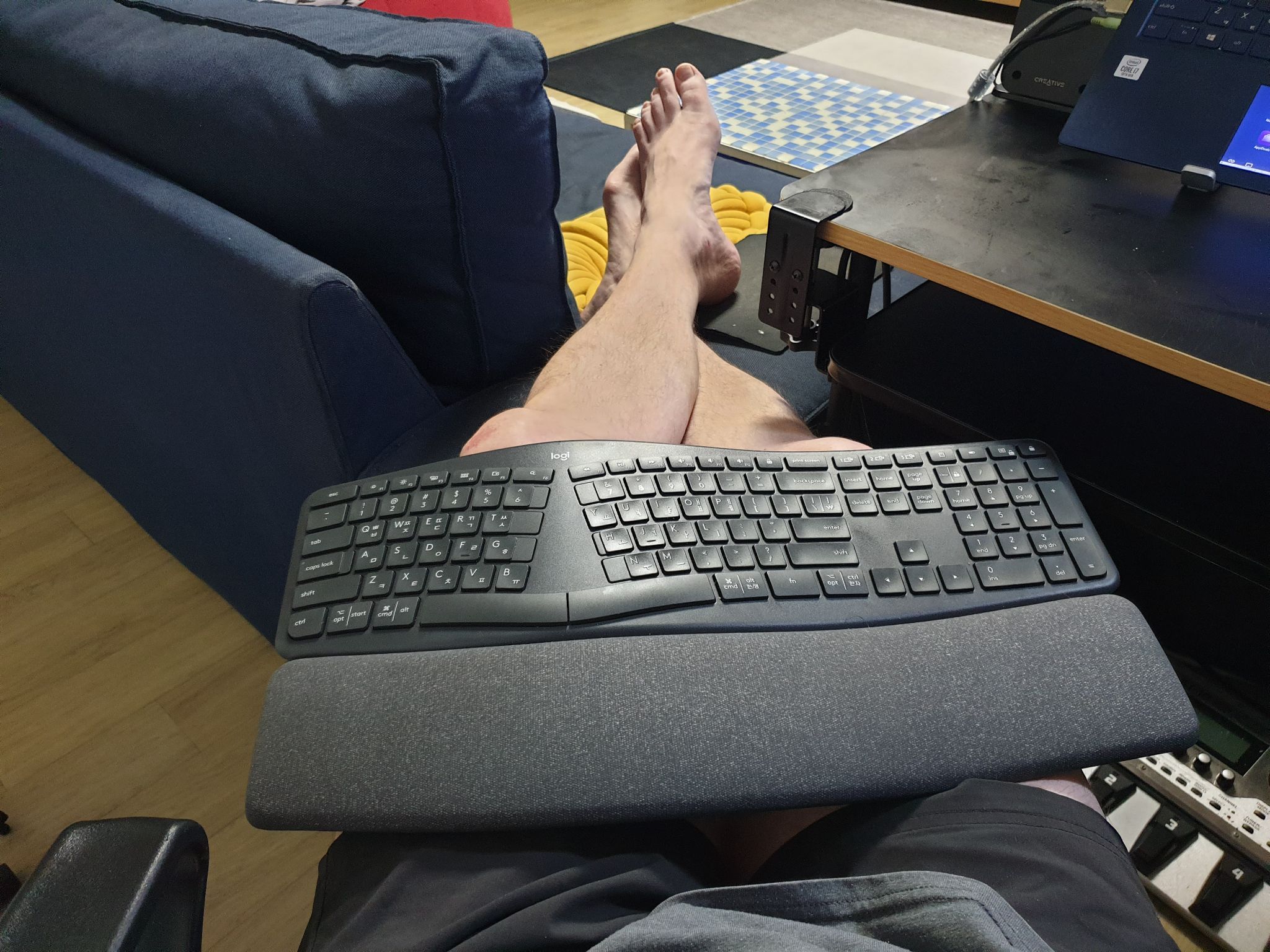
The Logitech K860 Wireless Ergo (150,000 won/$130) gets an 8.5 rating. It’s not as nice to type on as my wife’s mechanical keyboard, but I knew that when I purchased it. A slightly better typing experience and a smaller handrest would make this 10/10.
Who knew there were so many new styles of mice on the market?
Part of the reason for choosing the Logitech keyboard was that I had mouse options. Logitech offers several mice that pair with the same receiver. It seems Logitech is trying to bundle these two mice with the Ergo keyboard:
The MX Vertical seemed intriguing, but I have a pretty shallow keyboard drawer. I worried about knocking the mouse off whenever I closed the drawer.
The Ergo Trackball also seemed interesting. But the thumb trackball seemed awkward and would likely involve a learning curve. I read complaints about thumb pad pain. Selecting text seemed like a nightmare. Holding down your index finger while moving your thumb just seemed awkward.
So, I settled on the MX Master 3. I chose it for a couple of reasons. First—buttons, buttons, and more buttons! I bought my last mouse because it had a back button. I use it all the time when surfing and miss it when using a mouse without one.
But this mouse also has a horizontal scroll wheel! I often zoom in on documents or pages, which requires me to scroll horizontally. Navigating to the horizontal scroll bar is a massive pain. With those two features, I was sold!
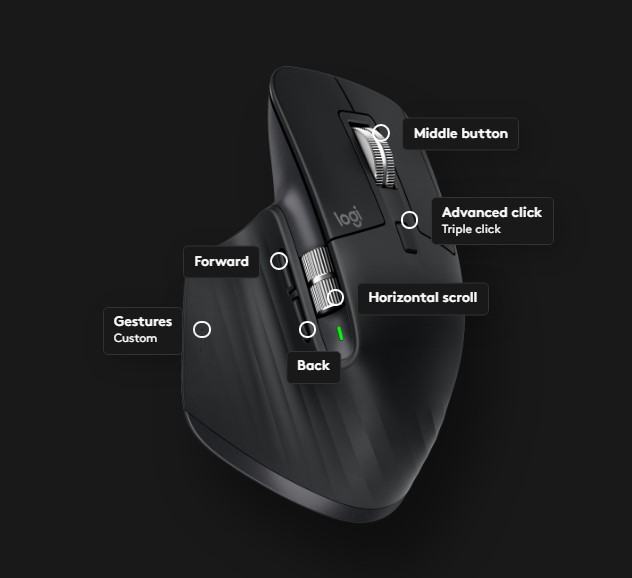
I bought this mouse for its buttons—and it’s got seven of them:
- Left
- Right
- Middle
- Shift wheel mode
- Back
- Forward
- Gestures
As you can see by the above pic, most buttons use the default settings. But I customized the wheel mode setting button to a triple-click. This has proved very helpful when selecting a line of text. The gestures button is set to open my clipping tool, which I often need. Like the keyboard, they can be customized by application, and you can back up all your settings.
Shake it to the left, now shake it to the right
Because this mouse is so customizable, I didn’t need a keyboard with a lot of customization. I use a fair number of keyboard shortcuts, but the more I can do with my mouse, the better. Multiple monitors necessitate using a mouse. I need to use my mouse, so if I’ve got my hand on it, I might as well be as productive with it as I can.

Having seven customizable buttons is fantastic—far more than most mice out there. But if you hold the gesture button and make a gesture with the mouse, you have four more buttons! Right now, I have it set up in the following way:
- Gesture Button + move mouse up = show desktop
- Gesture Button + move mouse down = hard refresh page
- Gesture Button + move mouse left = open Documents folder
- Gesture Button + move mouse right = open my time tracking app
I’m still playing around with customizations and trying to figure out which ones will work best for me. I never use the “forward” button but have yet to decide what to set it as. But even while learning how to get the most out of it, I’m loving this mouse.
I can scroll for miles and miles
Another cool thing about this mouse is the scroll wheel. Like many mice, it has a ratchet and free spin setting. Since I never use free spin mode or switch between modes, I customized that button to a triple-click. But this wheel changes from ratchet to free spin automatically when you give it a hard spin. It goes from scrolling lines to pages like nothing—and it’s pretty much silent. Very cool.
A function both the keyboard and mouse have that I don’t currently need, but is cool nonetheless, is Flow. You can pair these devices with two different computers (even Windows and Mac). And then drag and drop files between them! You can drag a document from your Windows machine to your Mac computer by dragging it to the edge of the screen. I don’t need that functionality, but it’s still pretty cool.
I was skeptical about the mouse being rechargeable, but Logitech claims you can use it for 70 days on one charge. In an emergency, you can get three hours of use out of a 1-minute charge from a standard USB-C cable. Other mice I looked at required much more frequent charging. I don’t expect any problems with this one.
It’s not all roses with these workspace upgrades
There is one significant drawback to this mouse. The horizontal scroll wheel is very buggy. Sometimes it works—but sometimes it doesn’t. I didn’t come across this in my initial research. But a Google search indicates it’s a widespread problem. There doesn’t appear to be a fix, but you can be sure I’ll be bugging Logitech customer support. In the meantime, I’ve learned that shift key + regular scroll wheel = horizontal scroll. Who knew?
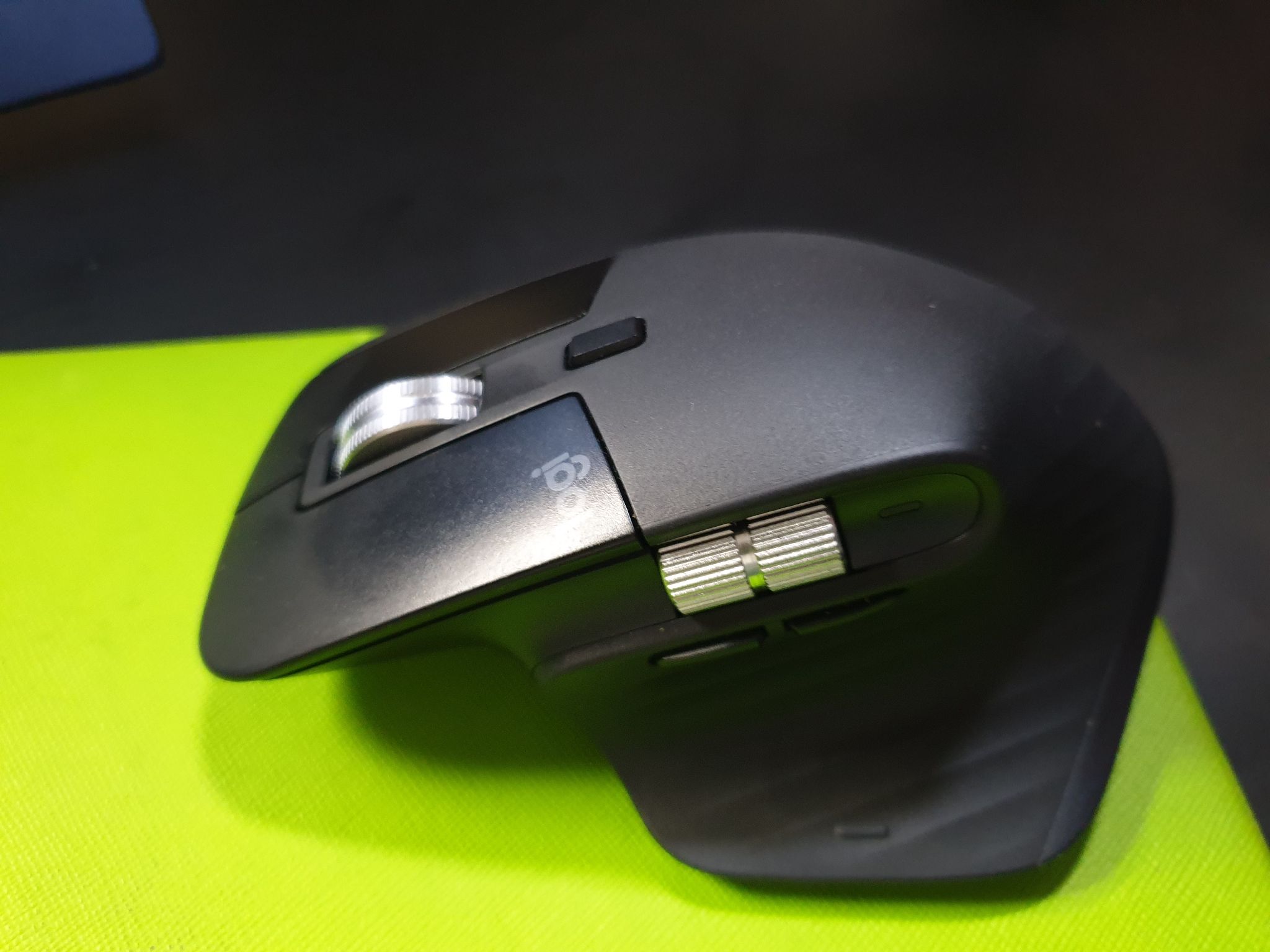
Other than that, I also love this mouse. I haven’t unlocked its full potential yet, but I will.
The Logitech MX Master 3 (90,000 won / $77) gets an 8.5 It would’ve been a 10 if the horizontal scroll wheel worked as expected. That was one of my deciding factors for purchasing it, after all.
My last workspace upgrade was free—well, sort of
Chrome has been my main browser for years. I’ve toyed with Edge (still use it occasionally), Brave, Firefox, Opera, but I always return to Chrome. But I’m guessing the thing you hate about Chrome is the thing I hate about Chrome—memory usage!
I saw a few posts about a newish Chrome-based browser that used significantly less RAM. I decided to give it a try.
It’s called Sidekick, and there’s a reason for that. Sidekick combines regular tabs with vertical tabs. But these tabs are “apps” that live on the left side of your browser. It also has automatic ad-blocking and anti-tracking. It achieves its lower RAM usage by intelligently suspending tabs. You can set exceptions to never suspend specific tabs or apps.
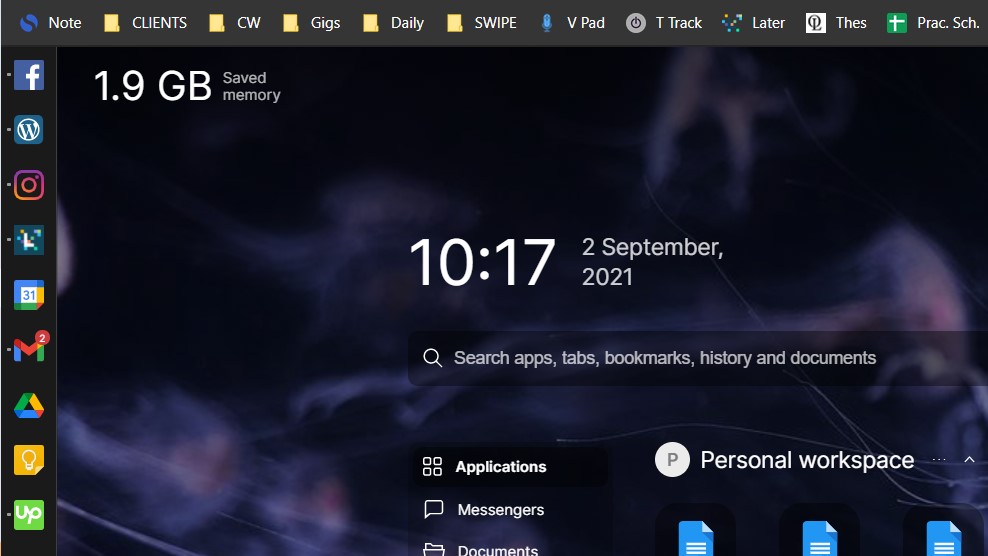
You can import most of your settings from Chrome (like bookmarks), but you can’t import your extensions. You’ll have to install those manually. The browser is still in beta. There will be a free version (limited sidebar apps) and a subscription-based version.
But…
…if you get 10 friends to sign up, you can get six months free. If you get 20 people to sign up, you get pro for life. Follow this link (affiliate link) if you’d like to try this new browser and help get me one step closer to free pro for life. Please remember to download, install, and subscribe (for free). Thanks!
Holy inconvenience, Batman!
As much as I like this new browsing experience, there are a few significant downsides. There is currently no new tab page customization (though the FAQ states it’s on the roadmap). I’ve been using Dialpad 2 for ages, so that’s a bit of a bummer.
The other downside is that “Ctrl + tab” doesn’t take you to the next tab. It brings up a list of open tabs and cycles through them in the reverse order you visited them. The first on the list is always the last tab, so it’s a convenient way to switch to your last tab. At present, there is no way to override this. People seem to miss this functionality, and this software is a beta, so we may see this change.
But other than these two minor inconveniences, I’m also loving this browser—have you noticed a theme? I like having my most frequently used apps pinned to the left. Opening Google Notes in split view is cool and useful. It’s a beta, but I’ve made it my default browser. I still have Chrome on my computer, but I haven’t used it in over two weeks.

The Sidekick Browser (affiliate link) (Free / $8–$10/month pro) gets an 8/10. It’s similar enough to Chrome to feel comfortable. But it has enough unique and interesting features to be worth the switch. Pretty good for a beta, and if I can swing the pro version based on referrals, I’ll be happy. I’d be satisfied with the free version, but not sure I’d pay the $8/month for the pro version.
You don’t need fancy new tools, but a few useful workspace upgrades make a difference
I’m delighted with my workspace upgrades. Despite a few minor drawbacks, they’ve functioned precisely the way I wanted them to. The customizations definitely help me work more efficiently. As such, I consider this money well spent.
Subsequent upgrades will likely involve my chair and desk. I bought both as a “temporary solution” to teaching online. When I bought them, I wasn’t anticipating spending most of my day using them. I suspect those upgrades may have to wait until Santa comes to visit.
What office peripherals and tools could you not do without? Drop me a comment and let me know! Also let me know what you think of Sidekick (affiliate link)—very keen to hear your thoughts!
Subscribe to this blog or follow me on Instagram, Threads, Facebook, LinkedIn, or Twitter for more content and updates.
Pingback: Dreams of a carefree freelancer dashed by realities of being a remote worker – DC CopyPro
Pingback: From EFL teacher to English copywriter and proofreader, two years on—what’s the verdict? - DC CopyPro
Pingback: Dreams of a carefree freelancer dashed by realities of being a remote worker - DC CopyPro
Pingback: Is an automatic AI translation of your webpage good enough? - DC CopyPro
Pingback: “What is the best browser?”—I’ve got a new answer to that question - DC CopyPro
Pingback: Do subject line testers and headline analyzers really work? - DC CopyPro