
- Trying to write Korean names in English seems simple—until you look closer
- Hi, I’m Rambo. Nice to meet you!
- Yoboseyo, hoksi, * * *-ga geo-gi it-na-yo?
- Hello, class! My name is Dean Comeau, but please call me Mr. Comeau
- Hi, my name’s Hong Gil-dong, I mean Gil-dong Hong
- Your first name doesn’t always appear first? Makes perfect sense!
- Great stories, but I thought this post was about how to write Korean names in English
- I don’t care how you spell your name—follow these rules when you write Korean names in English
- This is where things get “interesting”—a polite way of saying confusing and infuriating
- Enter the Olympic roster—this should clear things up!
- Writing Korean names in English—an Olympic perspective
- The importance of consistency when you write Korean names in English
- Spelling can vary—but not each time you write your name
- To use a hyphen or not use a hyphen—that is the question
- If only it were that easy to write Korean names in English
- So what does all this mean? What’s the best way to write Korean names in English?
Trying to write Korean names in English seems simple—until you look closer
Watching the Olympics reminded me of a seemingly simple language problem. But upon closer inspection it becomes much more complex. One of the first things we learn when studying a new language is how to introduce ourselves. That may seem pretty basic, but even giving your name can be tricky. Deciding how to write Korean names in English is even trickier.
Let me preface this post by stating my objection to Koreans adopting English names. This is a popular practice. Proponents claim it helps speakers feel more “connected” to the language. Additionally, those unfamiliar with Korean names may find them hard to pronounce. I disagree.
When I first came to Korea, I admit that Korean names were difficult to pronounce and remember. But to be completely honest, I’m pretty lousy at remembering English names, too. Like most things, learning to pronounce Korean names isn’t so bad with a bit of practice. Despite being new to Korea, I soon identified two problems with Koreans choosing English names.

Hi, I’m Rambo. Nice to meet you!
First, especially when teaching kids, people choose ridiculous names. I’ve had kids who want to be called “Superman”, “Tiger”, and “Choco”. Your class roster can soon get out of control once everyone tries to outdo each other. But this behavior isn’t confined to children.
I’ve known adult students who’ve opted for non-standard names like “Cherry” or “Romeo.” I once knew a recruiter with the English moniker Rambo Lee. To be fair, that was his Korean name in reverse (Lee Bo Ram). Kind of clever—but it was still hard to take a guy seriously when you had to refer to him as Rambo.
Yoboseyo, hoksi, * * * -ga geo-gi it-na-yo?
The second problem first arose for me over 25 years ago. At my first private academy, I taught kids and adults. Both the kids and adults enjoyed choosing English names. The adults were also eager to meet outside class to show me around and practice their English.
I called an adult student’s house to confirm plans with him one day. Remember, this was when home phones were still a thing (we’re talking about the mid-90s). On this occasion, my student didn’t answer. His wife did.

I knew a bit of Korean. On the phone, hello is “Yeoboseyo.” I knew that to ask for a person, you could use the phrase, “혹시 * * * 가 거기 있나요 (By chance, is so-and-so there)?” There was only one minor problem. I didn’t know this student’s Korean name.
To me, he was only Frank. That was his name on the attendance roster. That’s how I referred to him in class. I had no choice but to ask his wife, “혹시 프랭크가 거기 있나요?” Of course, she knew who I was referring to, but I felt like an idiot. We lost touch shortly after that, but to this day, I still don’t know Frank’s Korean name.
Hello, class! My name is Dean Comeau, but please call me Mr. Comeau
Once I started teaching at my university, I only used my student’s Korean names. But I often had 40 students per class. It wasn’t unusual to have five or more classes per semester. It was next to impossible to remember 150+ names. So I’d get my students to make nameplates (a piece of paper folded into a triangle they placed on their desks). This helped me call on them by name in class. They also helped in elective classes, consisting of students from various departments. In these classes, they helped students learn their classmates’ names.

In the first class of every semester, I had the students make these nameplates. After my first semester, I realized they needed guidance on how to write Korean names in English. The issue was not so much with spelling but with the use of capital letters—or the lack thereof.
In English, the use of capital letters is essential. You need to use them at the beginning of every sentence. The pronoun “I” is always capitalized. But there’s one other primary use for capital letters—proper nouns. Proper nouns are names of places—and people. Every semester, I’d see students make their nameplates without capital letters. And that was even after instructing them to do so.
Hi, my name’s Hong Gil-dong, I mean Gil-dong Hong
Trying to write Korean names in English presents several challenges. The first being that unlike in English, Korean names begin with the family name. So immediately, you are faced with a choice. Do you write 홍길동 as Hong Gil-dong or Gil-dong Hong?
To make this easy, I suggested a phrase my students could use when introducing themselves. “Hi, my name is Hong Gil-dong, but you can call me Gil-dong.” This avoided the need to switch family names and given names, but it also avoided any confusion. I’ve known Koreans who’ve gone by just their family name in English, i.e. people who go by “Choi” (only ever used as a family name). This is not a great strategy given the relatively small number of Korean family names.

This is an endless source of confusion for Korean EFL learners. First of all, there is always confusion about “first” and “last” names. Ask any beginner/low-intermediate English speaker from Korea what their first name is. You’ll likely get answers like “Kim” or “Park” (two of the most common Korean surnames).
Your first name doesn’t always appear first? Makes perfect sense!
But you can understand the confusion. With Hong Gil-dong, “Hong” comes first, even though it’s the family name. I explained to my students that English has several terms for “family name” and “given name”:

But even once we sort out this confusion, our troubles are not over. I taught students to refer to people by their first names. This is mainly a foreign concept for Koreans, except among close friends. Koreans still often use terms like “씨” with given names to be polite, which basically means Mr. or Ms.
This is perhaps why Koreans struggle with only using titles (Mr. / Mrs. / Ms. / Miss / Dr.) with family names. It was common for students to refer to me as “Mr. Dean” or “Comeau.” I would remind students that titles are only used with family names. I’d explain that a superior might refer to a subordinate by their surname. Like your boss shouting, “Johnson, where’s that report?” In most contexts, it’s considered quite rude.
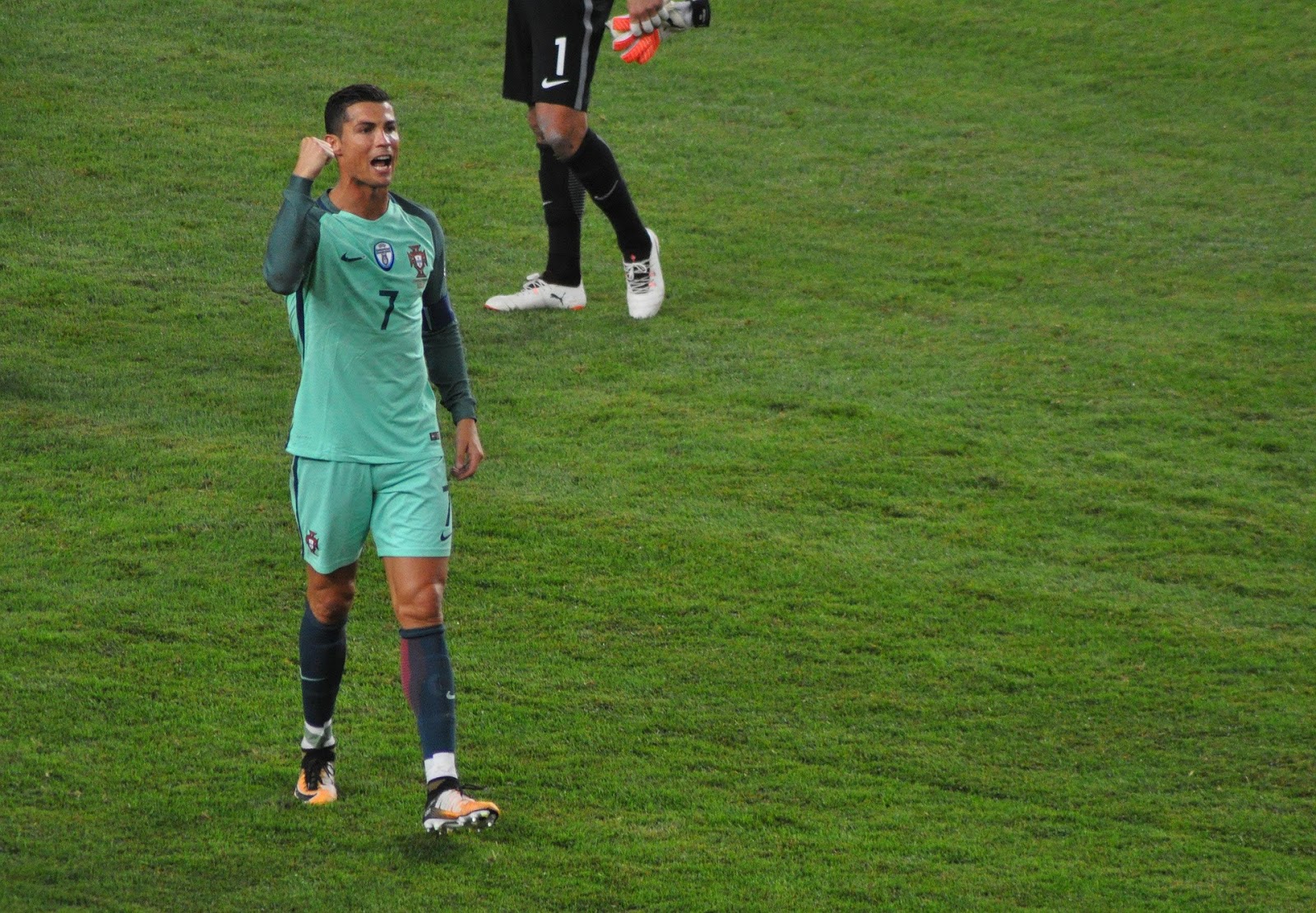
But then we’d talk about their favorite soccer players. You know, Rooney, Gerrard, Messi, Ronaldo, Zidane.
Then you have people like my friend from university who didn’t go by his first name. Remember that phrase I suggested that my students use? He used it perfectly—sort of.
This friend confused everyone in our dorm on the first day. He introduced himself by saying, “Hey, my name’s Mike, but you can call me Kirby.”
What? My name’s Dean, but you can call me Walter! WTF does that mean? It wasn’t like it was a common nickname—I’m Charles but you can call me Chuck. Several weeks later we learned his name was Mike Kirby. For whatever reason, people called him by his family name, and he went with it. He just neglected to tell us.
Great stories, but I thought this post was about how to write Korean names in English
But I’ve gotten off track. This post started out being about how to write Korean names in English. I’m going to leave spelling alone. The rules for Romanization have changed several times. Combinations for certain Korean vowels work in some contexts. But when combined with others, they can be troublesome.
Many non-standard spellings of family names better approximate Korean pronunciation than standard ones. My grandmother’s maiden name was Park. She was Scottish—not Korean. Bak, Pak, Bahk, and Pahk are all much closer to 박 than Park. Yi is much closer to 이 than Lee or Rhee. But there are too many rabbit holes to go down if I open up that can of worms. (Personal note—how many metaphors can I mix in one sentence?)
So this is what I told my students.

I don’t care how you spell your name—follow these rules when you write Korean names in English
What I focused on then, and what I’d like to focus on now, is the use of capital letters. The main focus is on how to use them when writing Korean names in English. This is particularly applicable to given names.
Rule #1—Names always begin with a capital letter. Always. (We can ignore lowercase name prefixes like “van.” They don’t apply to Korean names.)
Rule #2—You can’t use a capital letter in the middle of a word.
Rule #3—Using a hyphen combines two words into one—and thus, Rule #2 applies.
Following these three rules, it is acceptable to write the name 홍길동 as:
Hong Gildong
Hong Gil-dong
Hong Gil Dong
According to government rules on how to write Korean names in English, the third option is not viable. Given names are to be written as one word or hyphenated. But remember that I started this post by talking about the Olympics.
While watching the Korean athletes, of course, their surnames appear on their uniforms. Sometimes their full given name accompanies it. Other times, initials accompany the family name.

This is where things get “interesting”—a polite way of saying confusing and infuriating
Korean given names are typically two syllables. Take the example used throughout this post—Gil Dong. There are exceptions—the most common being one-syllable given names. But the majority of Korean given names follow this format.
Each syllable is usually based on a Chinese character with its own meaning. For example, my wife’s name means “beautiful person,” and my son’s name means “talented one.” Given names are essentially two words or ideas—but they are always used together as a unit. Even if you were best friends, you would never refer to Hong Gil-dong as Gil or Dong.
But when we use initials with Korean given names, we usually use two initials. So, you’d write Hong Gildong as Hong G. D. This makes sense when you write the name as Hong Gil Dong. But not when you write it as Hong Gildong or Hong Gil-dong. That would be like Christine Smith writing her name as C. T. Smith. Just because the second syllable starts with “t” doesn’t mean you should use it as an initial.
So technically, to write Hong Gil-dong’s name using his family name and first initial, you should write it Hong G. But this would give no indication as to what the second half of his given name is.
Enter the Olympic roster—this should clear things up!
Not at all! According to my research, Olympic athletes must provide two names. They must provide their name as it appears in their passport and their “preferred” name. I take this to mean “How you’d like your name displayed.”
So, I looked at the roster of Korean athletes on the Olympic page (you can sort by country—Republic of Korea). I noticed that none of the given names were hyphenated. I assumed this must be some Olympic committee rule or a limitation of the system. Though examining the regulations on names, this doesn’t seem to be the case. Most of the Korean given names were written as one word (Gildong). But there were several exceptions, where given names were written as two words (Gil Dong).

The Wikipedia page listing all the Korean athletes yielded somewhat different results. Most of the given names on this page are hyphenated names (Gil-dong). There’s one glaring exception—the roster for the rugby sevens team. All their given names appear as two words (Gil Dong). About half the given names for the rugby sevens players appear as two words on the Olympic roster page. The other half appear as one word.
But I’ve been watching a fair amount of the Olympics. And I’ve noticed some oddities when it comes to given names and the use of initials.
Writing Korean names in English—an Olympic perspective

The given names of the rugby sevens players all appear as two words on Wikipedia. About 50% are one word on the Olympic roster page. Yet all the names on the uniforms appeared as one word, with the given name first (Gildong Hong).
A female badminton player’s name is written as Kim Ga-eun (Wikipedia), but Kim Gaeun (Olympic List). The back of her shirt displayed Kim G E.


A judoka whose name appears as KIM Seongyeon (Olympic Page) and Kim Seong-yeon (Wikipedia) had KIM S. on the back of her judo gi.
In table tennis, there’s a rising star called Shin Yu-bin (Wikipedia). But the back of her shirt displayed Shin Yubin—the same as on the Olympic roster page.


The men’s soccer team’s jerseys each display a family name and two initials (HONG G D)—no periods after the initials.
Though I said I wouldn’t talk about spelling, I will talk about consistency. Another table tennis athlete, 정영식, is spelled Jeuong Youngsik on the Olympic page and Jeuong Young-sik on Wikipedia. Yet the back of his shirt displays Jeuong Young Sik. What confuses me the most is that the vowels “어” and “여” are essentially the same—the second starts with a “y”. So why has he represented “어” as “euo” and “여” as “you”? You can choose your own spelling, but you need to be consistent.


A famous volleyball legend’s name is listed as Kim Yeon-koung online. On her uniform, it’s KIM YOUNKOUNG. Here’s another spelling that irks me. Again, with 연경, the vowel “ㅕ” appears in both the first and second syllable. In the first syllable, it’s spelled with the “y” as “Youn,” but without it in the second “Koung.”
The importance of consistency when you write Korean names in English
And this is the point I tried to make with my students. I don’t care which of the three acceptable methods I presented that you use—but use it consistently. At the beginning of the semester, I recorded each student’s preferred spelling of their name. I then warned them that I’d mark it wrong if they used a different spelling for their name on tests. And I did. After all, I spell my name exactly the same every time I have to write it.
As an aside—it is impossible for me to know if these spelling inaccuracies were the choice of the athletes. It is possible they were following rules put in place by the government. Or a coach could’ve decided on the spelling when registering the athletes for a competition. I’m not assigning blame—just pointing out irregularities.
Spelling can vary—but not each time you write your name
In English, common names have adopted different spellings. For example, you can write the name Hailey as:
Hailee
Haleigh
Haley
Haylee
Hayleigh
Hayley
Haylie
But you choose one spelling, and you stick with it. You don’t write “Hailee” on your driver’s license and “Hayley” on your passport. And that’s what I told my students to do—choose one spelling/format and stick with it. But my research for this post has taught me that this may not be so easy.

To use a hyphen or not use a hyphen—that is the question
With given names, when you write Korean names in English as one word, this rarely causes confusion. But there are cases where a hyphen works better. Take the Olympic shooter Kim Mose. I’m guessing most of you read that as Kim “mows.” Written as Kim Mo-se, you “might” pronounce it “moh-see” when it’s actually closer to “moh-say”. This is more a limitation of Romanization than spelling. But hyphenating the name at least ensures it’s pronounced with two syllables.
Here’s another example. There is a handball player named Jung Ji In (Olympic List), Jung Ji-in (Wikipedia). Writing her name as Jung Jiin looks very awkward—it’s very rare to see two i’s back-to-back in English. This spelling would most likely not result in the desired pronunciation either. Again, a hyphen is helpful here. Jung Ji-in is much easier to read and better approximates the proper pronunciation.
If only it were that easy to write Korean names in English
Let’s muddy the waters even further. Several famous Koreans don’t seem to follow the rules for writing their names in English. As with the Olympic athletes, it is impossible to determine whether this was their choice. The press or fans could’ve adopted a spelling that’s become used through frequent use. Many times, like with Olympic athletes, there are multiple spellings of their names. This list is by no means exhaustive, but it serves to make my point.
Here’s a short list of celebrities who don’t write their given names as one word or don’t follow capitalization rules.
Jeong An Da—female bodybuilder
Min Jin Lee—novelist
Park Chan Ho—baseball player
Jae Suh Park—American actress
Nam Hee Seok—comedian
Jung Dae Hyun—singer (Chen)
Park Geun-Hye—former president
Nam June Paik—artist
Kim Woo Bin—actor
Park Chung Hee—former president
Moon Sun Myung—former religious leader
2nd Syllable Capitalized with –
Park In-Bee—golfer
Shin-Soo Choo—baseball player
Sung-Hi Lee—American actress
Soon-Yi Previn—Woody Allen’s wife
Unusual Spelling
Lee Hun Jai—Former prime minister
His name is spelled two different ways on the same page, including as 3 words. “Jai” is usually spelled “Jae.” Jai could easily be pronounced rhyming with “hi” or “bye.”

So what does all this mean? What’s the best way to write Korean names in English?
Which of the following do you think are acceptable English spellings of the name 홍깅동?

According to my rules, 3, 4, and 7 are acceptable. Current naming conventions lean towards 3 or 4.
1 → The given name isn’t capitalized.
2 → The family name isn’t capitalized.
5 → No capitals in the middle of a word.
6 → Hyphen make two words one (Rule 2).
8 → The final word isn’t capitalized.
What’s my preference? I’d suggest hyphenating all two-syllable given names (Gil-dong) for consistency. Though not ideal, when using initials (Hong G. D.), writing the first name with a hyphen makes more sense. Capitalizing all three words in a name can make it difficult to determine the surname. This can happen if people choose to change the order of the family and given names. With the name Yoon Hee Jeong, is Yoon the family name? Or is it Jeong? Writing it as Yoon Hee-jeong or Jeong Yoon-hee would clear that up.
This brings up another tip I often give Koreans. If you don’t want to risk confusing people about which part of your name is your family name, use a comma. It’s perfectly acceptable to write your name as Hong, Gil-dong. This preserves the natural order of Korean names. It also removes any confusion about how people can refer to you.
Until the Korean government adopts new rules/standards, it’s up to you. But pick a format and use the same Romanization to represent the same characters. But most importantly—be consistent. Choose one way to write your Korean name in English and use it. Always. No exceptions. Unless you’re competing in the Olympics. 😉
Subscribe to this blog or follow me on Instagram, Threads, Facebook, LinkedIn, or Twitter for more content and updates.

4 thoughts on “The best way to write Korean names in English? Well, it’s complicated…”