
- Understanding the challenge of English signage in Korea
- Where the Twosome Place sign went wrong
- There’s an app for that—sort of
- The broader context—Korea’s tourism success
- Why professional English signage in Korea and communication matter
- The right approach—you can’t go wrong with a professional approach to English signage in Korea
- How DC CopyPro can help with English signage in Korea
- Moving forward—embracing Korea’s global appeal
- Quality English signage in Korea is an investment, not a burden
In late January, a sign in a Twosome Place cafe in Seoul got lots of attention—for all the wrong reasons. Ironically, the sign was meant to address communication challenges. Sadly, it failed to communicate this effectively. It quickly went viral on Reddit and then in Korean media. The post generated thousands of passionate comments from both sides. It sparked discussions about cultural expectations, tourism, cross-cultural communication, and English signage in Korea.
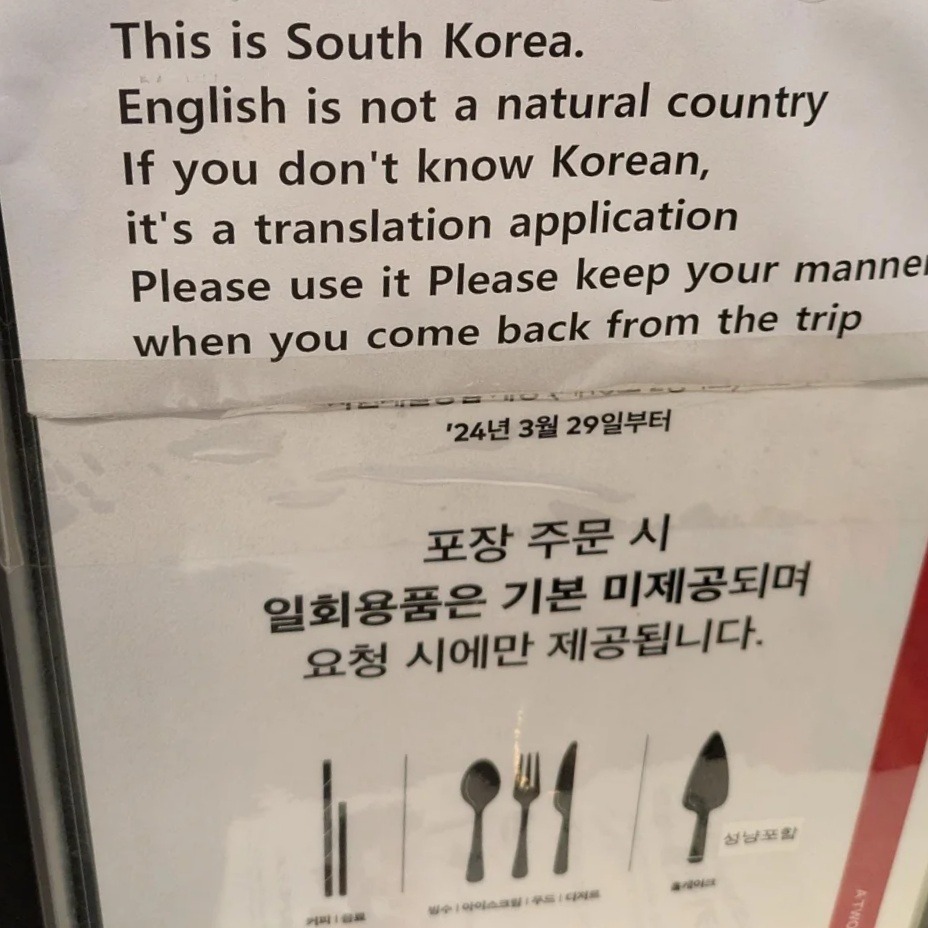
The notice asked foreign customers who couldn’t speak Korean to use a translation app. It referred to the language barriers and stress for cafe staff. The request may seem quite reasonable. But this incident highlights a critical issue faced by many Korean businesses:
How to communicate with international visitors effectively, professionally, and without unintentionally causing offense.
Understanding the challenge of English signage in Korea
Despite years of focus on English education, English is not an official language in Korea. Korean is central to Korean culture and identity. Businesses in Korea have every right to operate in Korean. That’s not the issue at hand.
But Korea is a major tourism destination. It attracts millions of international visitors each year. Korean culture has captured global attention—the examples are endless.
- K-pop (BTS, Blackpink)
- Korean shows (Squid Game and Kpop Demon Hunters)
- Korean cuisine
- Korean beauty products
- Etc.
Seoul has become one of Asia’s most popular tourist cities—tourists flock here. Thus, businesses in tourist-heavy areas will regularly interact with non-Korean-speaking customers. Korean may be very popular on language learning apps like Duolingo. But it’s only the official language of South Korea and North Korea.
This creates a genuine challenge for Korean business owners and staff. Language barriers can lead to
- Order mistakes.
- Customer dissatisfaction.
- Longer service times.
- Frustrated employees and customers.
These are legitimate operational concerns that deserve acknowledgment—and solutions.

Where the Twosome Place sign went wrong
The intention behind the Twosome Place notice wasn’t necessarily wrong. It sought to streamline operations and reduce miscommunication—a very reasonable motive. But as I’ve highlighted in many of my daily posts, I salute the intent but not the execution. It reminds us of critical issues businesses must consider when drafting customer-facing English communications.
1. Tone and phrasing matter when it comes to English signage in Korea
How you word a message can make the difference between helpful guidance and perceived hostility. It’s not so much “what” you say, but “how” you say it. The Korean version of a notice may sound perfectly reasonable. But its translation into English can change how the message is received. English, like any language, carries subtle connotations in
- Word choice.
- Sentence structure.
- Tone.
- Directness.
These may not map perfectly from a direct Korean translation, even when done professionally.
I’m reminded of a former colleague who was learning Korean. In Korean, it’s very common to drop pronouns when they’re understood from the context. But as an English speaker, pronouns are necessary in English. Not using them in Korean felt very awkward, so he insisted on using them. Thus, he often used the Korean pronoun “tangshin” (당신) when speaking with Korean coworkers.
Using “you” in this sense is extremely rude. It carries the connotation of highlighting difference (you, not me) or aggression( “Hey, you!”). He was focused on the (English) grammar but not the nuance. Despite his attempts to impress his Korean coworkers, he likely ended up offending them.

2. Unintended implications of poor English signage in Korea
The actual request isn’t likely what triggered responses from many. It was more about how the request itself made non-Korean speakers feel unwelcome or as if they were a burden. There’s a significant difference between
- “Please help us serve you better by using this translation app.”
and
- “You must speak Korean or use a translation app.”
Both deliver the same basic information. But one feels helpful while the other feels exclusionary—denotation versus connotation.
3. The risk of viral backlash
Everyone dreams of going viral—it can translate into a massive boost in profits. But you want to go viral for the right reasons.
These days, you can photograph and share any sign, menu, or notice. Thousands of people can see it within hours. I post about such content daily. Many examples are my own, but many have been shared with me by friends, family, and followers. What was likely meant as internal guidance for a specific location became an international talking point. Potentially, it may have affected more than just that one cafe. It may have impacted the entire chain and, by extension, Korea’s hospitality industry.
Would you like to be the cause of an anti-Korean tourism campaign because of an “innocent” sign? Though this scenario isn’t likely, in this reactionary world, it’s definitely possible.
There’s an app for that—sort of
This controversy is particularly ironic considering Korea’s success in attracting tourists. And let’s not forget Korea’s global cultural influence. A lot of time and money have gone into promoting Korea as a welcoming destination. Korean businesses have increasingly recognized the value of being accessible to international customers. This includes everything from hotels and restaurants to shops and entertainment venues.
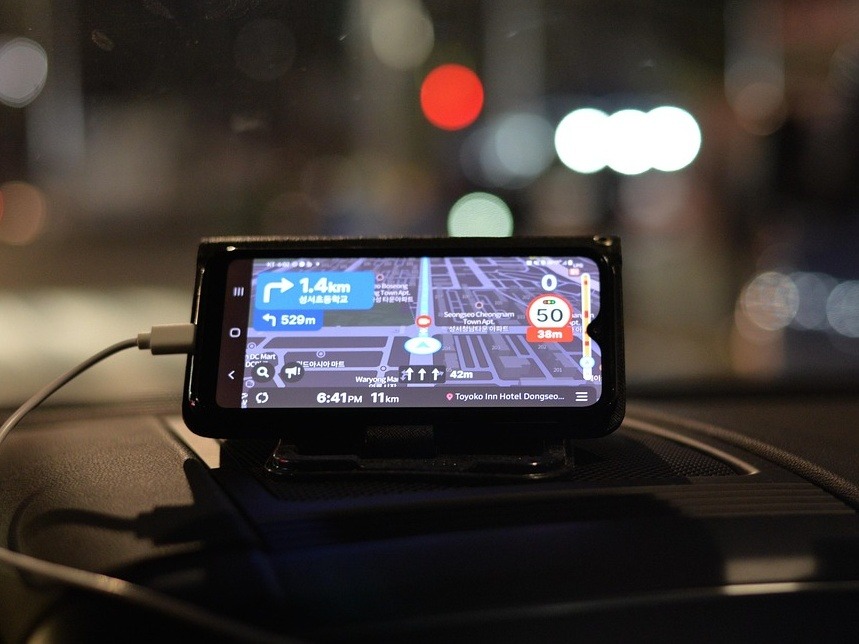
Anyone who’s lived in Korea for a while knows that Google Maps doesn’t work great here. You need to use a Korean app called Naver Maps. I remember years ago (and I do mean years ago—more than a decade), I used to do bike tours. I had finished a ride with a tourist from abroad, and he was trying to get back to his hotel. He’d downloaded the Naver Maps app, but there was a “slight” problem—it was only in Korean. And, there was no way to type in English, and he didn’t have a Korean keyboard installed on his phone.
I don’t remember how I helped him. I guess I must’ve helped him flag down a taxi and given the driver directions in Korean. But it highlighted a real problem—one that “someone” realised with the 2018 Olympic Winter Games approaching. I don’t remember exactly when it happened. But around that time, Naver Maps started becoming more English-friendly.
The broader context—Korea’s tourism success
Korea, like many countries in Asia, relies on tourism. As such, Korean businesses have found creative solutions to the language challenge. Some offer picture menus. Others provide multilingual ordering kiosks or translations built into their ordering systems. Some hire staff with basic English competency or bilingual employees for busy locations.
No one wants to transform Korea into an English-speaking country. Nor do they want to burden Korean businesses with unreasonable expectations. It’s about finding practical, welcoming ways to serve a diverse range of customers. These are people who’ve come to experience Korean culture, cuisine, and hospitality.

Why professional English signage in Korea and communication matter
And here’s the crux of the matter—language matters. Whether you want to accept it or not, it does. Businesses need to communicate with customers. The quality of English signage in Korea, including notices, menus, and other materials, matters enormously.
Professionalism reflects on your brand
Your signs and notices are often a customer’s first impression of your business. Awkward English, grammatical errors, or tone-deaf messaging stand out. They can make your high-quality business seem less professional or welcoming.
Professional English signage in Korea prevents misunderstandings
Poor English can create confusion rather than clarity. A sign meant to be helpful can become puzzling. It can even be offensive if the English doesn’t convey the intended meaning. Professional translation and copywriting deliver your message the way you intended.
Cultural sensitivity
Effective cross-cultural communication requires more than just language translation. It requires understanding cultural expectations. An expert understands communication norms and how audiences will receive messaging. What sounds fine in Korean might feel harsh or unwelcoming when translated into English, and vice versa.
Professional English signage in Korea builds goodwill
Well-crafted English communications show that a business values its international customers. It tells them it has invested in serving them well. This builds goodwill and positive word-of-mouth. Both are especially valuable in the age of social media and online reviews.
Avoiding viral controversies
The Twosome Place incident demonstrates how poorly executed English signage in Korea can become a PR nightmare. It can extend far beyond the original location. Professional copywriting helps avoid the kind of viral backlash that can damage a brand’s reputation.
The right approach—you can’t go wrong with a professional approach to English signage in Korea
Here’s the fundamental truth highlighted by the Twosome Place controversy. Using correct grammar, appropriate tone, and culturally sensitive language in English signage in Korea is never the wrong choice. Have you ever heard someone complain that the grammar, spelling, or tone of your English signs, menus, or website was too good?
- “This English menu is too perfect. Something must be wrong. There’s no way I’m eating here. Let’s go!”
Of course not!
On the other hand, when you get it wrong, you risk being offensive or confusing. You can harm your business or reputation, even unintentionally.
A professionally drafted sign at that Twosome Place location would likely have gone unnoticed. It would have communicated the same basic request. But the key difference is that customers would feel respected and appreciated. For example:
- “To serve you better: We’ve prepared translation apps at the counter to help us communicate clearly with all our guests. Please feel free to ask our staff for assistance!”
Or
- “We ask customers to remember that English is not an official language in Korea. Please have your translation app open on your phone so we can serve you better.“
This achieves the same goal—encouraging the use of translation technology. It does so while framing it as a service enhancement. These versions don’t come across as demands or imply that foreign customers are a burden. It also doesn’t blame customers for not speaking Korean.

How DC CopyPro can help with English signage in Korea
DC CopyPro understands the unique challenges you face when communicating with English-speaking customers. I specialize in professional, culturally appropriate English copy for Korean businesses, including:
- Signage and notices that communicate your policies clearly in a welcoming tone.
- Menus that make your offerings accessible without losing their authentic Korean character.
- Customer service materials that help your staff communicate effectively with international guests.
- Marketing content that appeals to both Korean and international audiences.
- Website localization that preserves your brand voice across languages.
I can offer a unique skill set thanks to
- 30+ years of living in Korea.
- 25+ years teaching English as a Foreign Language (with an MA in TESOL).
- More than 4 ½ years working in marketing.
Having been here for so long, I understand both Western cultural expectations and Korean business contexts. You need to do more than just translate. You need to communicate effectively across cultures. This ensures your message resonates with your audience while avoiding unintended negative implications. I can help you with that.
Moving forward—embracing Korea’s global appeal
The Twosome Place controversy shouldn’t be seen as a failure of Korean hospitality. Nor should it serve as an example of unreasonable foreign expectations. Instead, it’s a reminder of the challenges that accompany Korea’s global success and popularity.
Korea continues to attract international visitors and expand its cultural influence worldwide. As this trend continues, the need for effective cross-cultural communication will only grow. Korean businesses that invest in professional English communications aren’t abandoning their Korean identity. You aren’t catering to unreasonable demands. You’re recognizing the reality of operating in a globalized world. You understand your customers come from diverse linguistic backgrounds.

While the challenge is real, there is good news. With the right approach, you can maintain your authentic character. You can also remain accessible and welcoming to international guests. Professional English signage and communications are a key part of that balance.
Quality English signage in Korea is an investment, not a burden
You want the same thing as every Korean business—happy customers, smooth operations, and a positive reputation. Quality English communications support all these goals. They
- Reduce misunderstandings.
- Create positive experiences.
- Demonstrate professionalism that reflects well on your brand.
The Twosome Place incident highlights a crucial reminder. Poorly written English communications can backfire, regardless of their intentions. The lesson isn’t that you should feel obligated to accommodate English speakers. Instead, it’s that when you choose to communicate in English—whether through signs, menus, or other materials—getting it right matters.
Do you serve international customers? Or do you want more tourists to visit you? DC CopyPro can help with English signage, notices, menus, or other customer-facing materials. I can ensure that your English communications are
- Professional.
- Culturally appropriate.
- Effective in building the kind of positive customer relationships that benefit everyone.
Don’t let a poorly worded sign become tomorrow’s viral controversy. Contact DC CopyPro today and communicate with confidence across cultures.
Subscribe to this blog or follow me on Instagram, LinkedIn, Facebook, or Threads for more content and updates.
